Cape Coral Homes Are a Different Animal. Your Paint Job Should Reflect That.
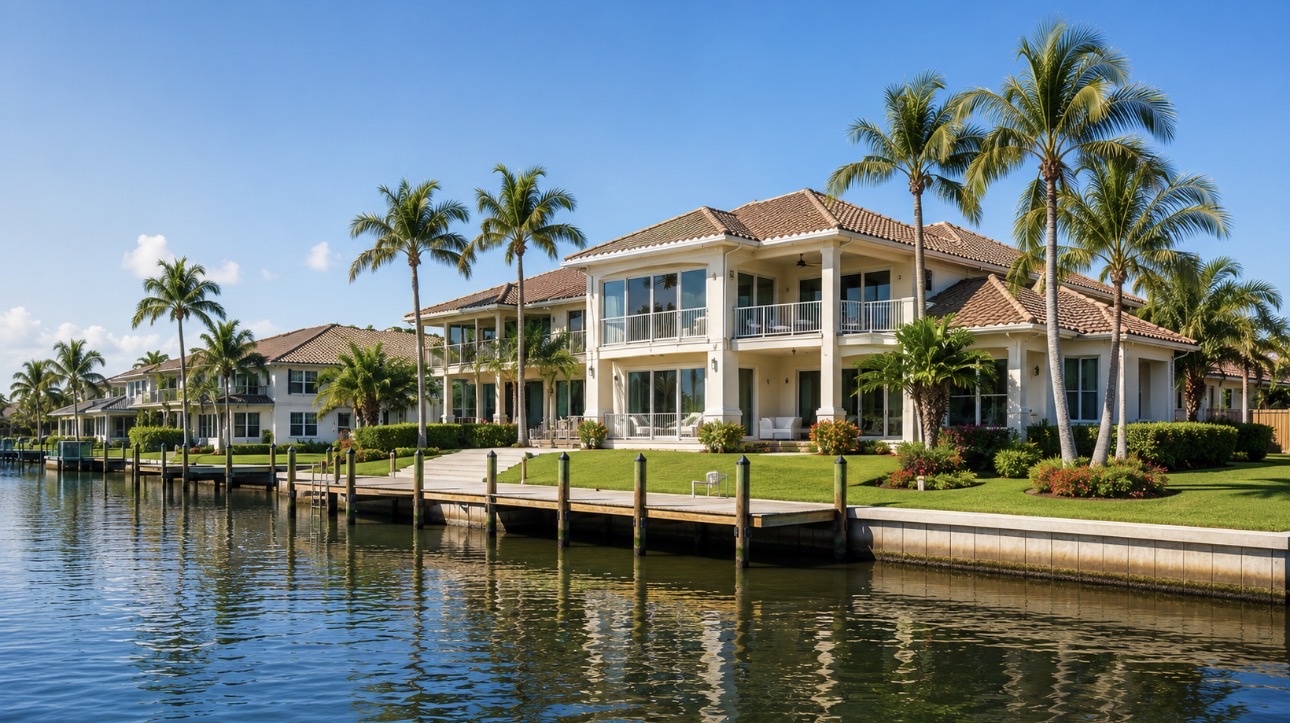
Cape Coral wasn’t built like most cities. It was carved out of the ground — literally dredged and platted in the late 1950s and early 1960s into what became the largest canal system in the world. More than 400 miles of navigable waterways thread through the city, and the result is that an enormous percentage of Cape Coral homes sit within close proximity to saltwater or brackish water every single day.
That fact alone changes the equation on a paint job. Add in the UV exposure, humidity, stucco construction, and the differences between Cape Coral neighborhoods — and you have a market where local knowledge isn’t a nice-to-have. It’s the difference between a paint job that lasts and one that starts breaking down before you’ve had time to enjoy it.
The Canal System Changes Everything
Most homeowners understand beachfront properties need special attention. What fewer people think about is how much Cape Coral’s canal system replicates coastal exposure across the entire city.
Salt air doesn’t stay at the water’s edge — it travels. In Cape Coral, where canals run behind homes, alongside roads, and through neighborhoods in all four quadrants, salt exposure is effectively citywide.
Salt air accelerates oxidation on metal, breaks down paint film faster than inland environments, and drives moisture into any gap that isn’t properly sealed. Once moisture gets behind the coating system, adhesion starts failing from the inside out.
A paint job that doesn’t account for salt exposure will age faster than it should. More thorough prep, complete caulking with moisture-rated products, and finishes with strong moisture and mildew resistance aren’t upgrades here — they’re baseline.
Saltwater vs. Freshwater Canals
Not all Cape Coral canals are the same, and the distinction matters.
- South and West Cape: predominantly saltwater access neighborhoods (Pelican, Cape Harbour, Tarpon Point, Surfside/Veterans corridors). Direct canal-to-river-to-Gulf connections mean higher salt exposure.
- North Cape: many freshwater canal systems with less aggressive salt influence, but still humid and high-UV.
- East Cape: generally more inland in character in some areas, with less canal influence — still Florida conditions, still mildew and UV.
A crew that treats every home the same regardless of location is missing something. Scope and product selection should reflect the home’s actual exposure profile.
Stucco on Cape Coral Homes
Cape Coral is a stucco city — concrete block construction with stucco finish across most homes, from 1960s originals to newer builds in the northwest corridor.
Older homes often have decades of paint layers and patch history. Some were maintained well. Many were painted over repeatedly with inconsistent prep and incompatible products buried under new coatings. A thorough crew won’t skip the “surface story”: testing what’s there, identifying adhesion problems, and finding hairline cracks that open with temperature cycling.
Newer construction in the northwest quadrant has different needs: builder-grade paint approaching first repaint, new stucco stress cracking, and a first maintenance cycle that needs correct crack repair, priming, and caulking before topcoats.
UV Exposure and Color Fading in Cape Coral
Cape Coral gets full, direct sun exposure most of the year. West-facing walls catch intense afternoon sun. South-facing elevations take sustained UV. Water reflection can increase the exposure load for canal-facing elevations.
Color fading is the visible result. Without strong UV-resistant products, west and south elevations start chalking and washing out within a few years — and once coatings reach that stage, they’re losing protective function, not just looks.
This is where premium exterior products with strong UV inhibitors show their value over time: better color retention and slower film degradation in the exact conditions Cape Coral creates.
Mildew, Algae, and What Cape Coral’s Humidity Does to Paint
In Cape Coral, mildew and algae establish quickly on shaded soffits and north-facing walls — accelerated by warmth, humidity, and moisture coming off the canal system.
Painting over mildew without treating it is one of the most common and costly mistakes. Growth continues under the new finish and compromises adhesion from underneath, showing up as bubbling, peeling, or discoloration within a season or two.
Proper treatment means washing with an appropriate cleaning solution (not just a rinse), full drying, and finish products with mildewcide — especially on vulnerable elevations.
The Neighborhoods and What They Mean for Your Paint Job
- Cape Harbour and Tarpon Point: high-end waterfront, direct saltwater access, premium finish expectations.
- Southwest Cape: older GDC-era neighborhoods with heavy paint history and sailboat-access exposure.
- Southeast Cape: more varied in age and exposure; still humid and high-UV with mixed canal influence.
- Northwest Cape: growth corridor — newer homes, builder-grade finishes, first repaint needs.
- Northeast Cape: mixed age and condition, transitioning character as development pushes north.
Where a home sits in the city changes exposure and surface history — and that should change the scope.
What a Cape Coral Paint Job Should Include
- Thorough wash with cleaning agents that address mildew/algae before prep begins.
- Complete caulking of gaps, joints, and penetrations with high-moisture/high-movement products.
- Prime bare/patched/compromised surfaces before finish coats.
- Products matched to exposure (saltwater vs freshwater canal proximity, sun orientation, surface condition).
- Two finish coats minimum at proper film thickness with dry time respected.
- Completion walkthrough before closeout.
Why Local Knowledge Matters in Cape Coral
Anyone can show up and put paint on a Cape Coral home. Accounting for the realities of a city built on canals, high UV, humidity, and a housing stock spanning 60+ years is different.
Rollur was built by people who understand the difference between a job on a saltwater-access canal in Southwest Cape and a newer build in the Northwest corridor — and that knowledge shows up in scoping, product specification, and crew vetting.
Every crew on Rollur is vetted for local experience and local standards. Your estimate accounts for what your home actually needs — not what a generic formula says a house that size “should” cost.
Get Your Instant Estimate
Rollur proudly serves Cape Coral and surrounding Southwest Florida communities.